
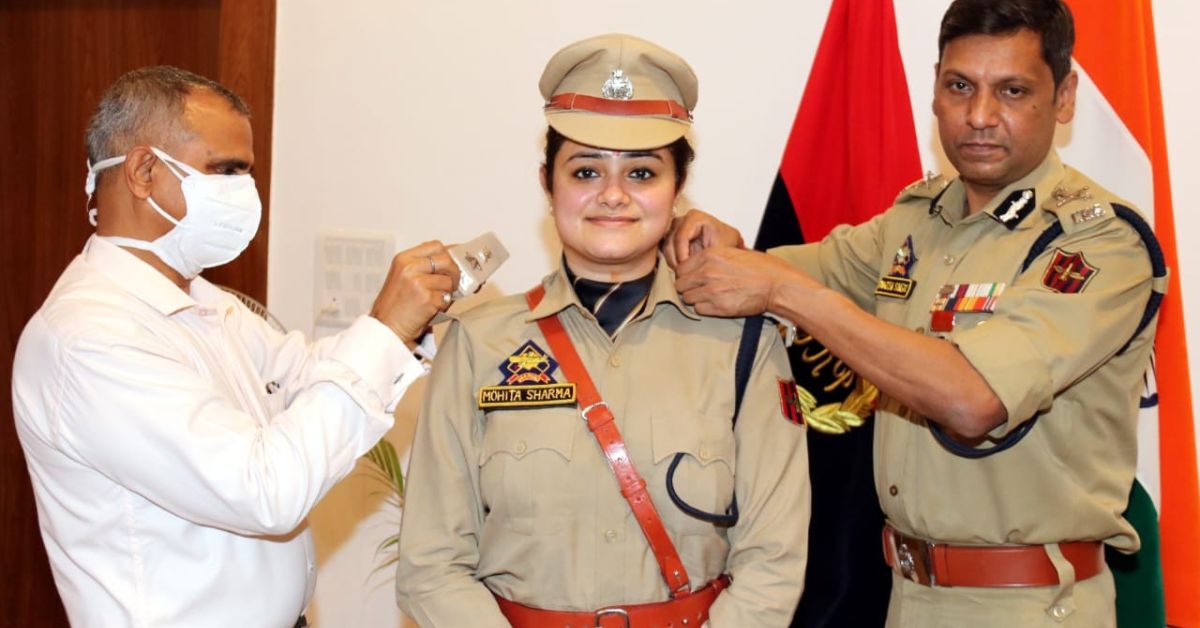
Mohita Sharma IPS is an Indian Police Service officer associated with the AGMUT cadre and known for her service in challenging administrative and policing environments. Public government records provide a stronger foundation for her biography than many viral social-media descriptions.
An official IPS civil list identifies Mohita Sharma as a direct-recruit IPS officer, records her date of birth as 13 December 1989, lists her educational qualification as B.Tech., and shows her as part of the 2017 direct-recruit batch with an allotment year of 2019. More recent government material also places her within the AGMUT cadre seniority structure. This article covers her verified profile, education, IPS career context, role of police leadership, and lessons for civil-service aspirants in 2026.
Mohita Sharma IPS Quick Facts 2026
| Detail | Information |
| Full name | Mohita Sharma |
| Profession | Indian Police Service officer |
| Cadre | AGMUT |
| Direct recruit batch | 2017 |
| Allotment year | 2019 |
| Date of birth | 13 December 1989 |
| Educational qualification | B.Tech. |
| State shown in civil list | Delhi |
| Service context | AGMUT cadre |
| Earlier listed posting | SP, Ramban in the cited civil list |
The official IPS civil-list material records Mohita Sharma’s name, date of birth, B.Tech. qualification, direct-recruit status, 2017 batch, and allotment year 2019. The posting shown in a particular civil list should be read as a record for that publication period rather than assumed to be permanent.
Mohita Sharma IPS Early Background and Education
Government civil-list information identifies Mohita Sharma’s educational qualification as B.Tech. This is another example of the diversity of educational backgrounds among civil servants. Technical education can develop analytical thinking, problem-solving skills, and comfort with structured systems, although success in the Civil Services Examination still requires preparation across a much broader syllabus.
For engineering graduates considering UPSC, the lesson is not that an engineering degree provides an automatic advantage. Instead, technical students may need to spend additional time developing comfort with humanities, essay writing, governance, ethics, and social-science subjects.
Mohita Sharma IPS and the IPS Service Journey
Official records identify her as a direct-recruit IPS officer of the 2017 batch, with an allotment year of 2019 in the cited civil-list record. A more recent 2025 government seniority document also refers to Mohita Sharma as an IPS officer of the 2017 batch within the AGMUT cadre structure.
The distinction between examination success, batch information, and allotment year can sometimes confuse readers. Government service records may use specific administrative categories that should not be casually replaced by assumptions from social-media biographies.
Understanding the AGMUT Cadre
The AGMUT cadre serves the Union Territories and the Union Territory of Jammu and Kashmir and includes officers who may work across different regions during their careers. Such service can involve varied policing environments, administrative structures, security conditions, and public-order responsibilities.
An officer’s experience can therefore include both urban and geographically challenging assignments. Career movement depends on administrative requirements, cadre rules, seniority, and government decisions.
Police Leadership and Administrative Responsibility
IPS officers can perform a wide range of responsibilities depending on rank and posting. These may involve:
- Maintaining law and order.
- Criminal investigation and supervision.
- Intelligence coordination.
- Public safety planning.
- Traffic and disaster management.
- Community policing.
- Security administration.
- Personnel leadership.
The exact duties of an officer depend on the specific post. Therefore, a biography should avoid assuming that every IPS officer performs the same daily functions throughout a career.
An Earlier Publicly Listed Posting
The cited IPS civil list shows Mohita Sharma as SP, Ramban at the time that record was published. Because police officers can be transferred or reassigned, this should be understood as a historical record rather than a guaranteed current posting in 2026.
For current posting information, readers should check the most recent government notification or official police and cadre records rather than relying on an old biography page.
What UPSC Aspirants Can Learn From an Engineering-to-Civil-Service Path
A B.Tech. background can be helpful for developing analytical habits, but UPSC preparation requires a major expansion beyond technical subjects.
Engineering graduates should deliberately develop:
- Strong reading habits for social sciences.
- Clear descriptive writing.
- Understanding of constitutional and governance issues.
- Current-affairs analysis.
- Ethical reasoning.
- Essay structure.
A common mistake is assuming that objective problem-solving ability automatically translates into high Mains marks. The descriptive examination rewards balanced analysis, relevant examples, and clear communication.
Read More: Neha Byadwal: Biography, UPSC Rank, Education and Career 2026
How to Prepare for the IPS Through UPSC
Candidates enter the IPS through the UPSC Civil Services Examination, subject to rank, preferences, vacancies, eligibility requirements, and applicable rules.
A preparation plan should cover:
- Prelims: Conceptual clarity and MCQ practice.
- Mains: General Studies, essay, optional subject, and answer writing.
- Personality Test: Awareness, judgment, communication, and authenticity.
Candidates interested in the IPS should also understand that service allocation depends on the overall process and not merely on an intention to become a police officer.
Physical and Personality Requirements
The Civil Services process includes eligibility and medical requirements governed by applicable rules. Aspirants should always consult the latest official UPSC notification rather than depending on old videos or blog posts, because rules and vacancy details can change.
Physical fitness is valuable for anyone considering a demanding public-service career. A regular routine involving appropriate exercise, sleep, and nutrition can support both health and long-term study consistency.
The Importance of Source Verification in IPS Biographies
Public interest in officers can lead to rapidly copied biographies containing incorrect information about age, rank, marriage, education, cadre, or current posting.
A trustworthy biography should prioritize:
- Official UPSC documents.
- IPS civil lists.
- Government notifications.
- Reputable contemporary reporting.
For Mohita Sharma, the official civil-list material is particularly useful because it directly records core service details, including date of birth, educational qualification, and cadre-related information.
Leadership Lessons for Aspirants
Police leadership requires more than academic success. Aspirants can begin developing relevant qualities before entering public service:
- Staying calm under pressure.
- Listening before making decisions.
- Communicating clearly.
- Understanding different perspectives.
- Taking responsibility for mistakes.
- Working effectively with teams.
These qualities are useful not only in the IPS but in almost every professional environment.
Common Mistakes Made by Civil-Service Aspirants
Some frequent mistakes include studying without reading the syllabus, collecting excessive resources, ignoring answer writing, and following unverified social-media strategies.
Candidates should also avoid building their entire plan around one officer’s biography. Every successful officer has a different background and timeline. Inspiration is useful; imitation without adaptation is not.
A Sustainable Civil Services Study Plan
A practical weekly routine can combine foundational study, current affairs, revision, and testing.
For example, a candidate might devote most of the week to General Studies and the optional subject, complete daily current-affairs analysis, practice several answers each week, and reserve time for revision and mock-test analysis.
The schedule should be adjusted according to whether the candidate is a full-time aspirant, student, or working professional.
Key Takeaways From Her Profile
The publicly available service record highlights several useful lessons:
- Civil servants come from diverse academic backgrounds.
- Technical education can be combined with public-service preparation.
- Official documents are more reliable than viral biographies.
- Batch and allotment-year terminology should be understood accurately.
- Current postings can change and should be date-verified.
- UPSC preparation requires both knowledge and communication skills.
These principles are especially important for writers and readers creating 2026 biographies, where outdated information can easily be presented as current.
FAQs:
Who is Mohita Sharma?
Mohita Sharma is an Indian Police Service officer associated with the AGMUT cadre.
What is Mohita Sharma’s educational qualification?
The cited official IPS civil list records her educational qualification as B.Tech.
Which IPS batch does Mohita Sharma belong to?
Government records identify her as a direct-recruit IPS officer of the 2017 batch.
What is Mohita Sharma’s date of birth?
The cited IPS civil-list record gives her date of birth as 13 December 1989.
What is her cadre?
She is associated with the AGMUT cadre.
What posting is shown in the civil list?
The cited historical civil list shows her as SP, Ramban at the time of publication.
Is the SP, Ramban posting necessarily her current posting?
No. Officer postings can change, so older civil lists should not be treated as proof of a current 2026 assignment.
Can engineering graduates prepare for the IPS through UPSC?
Yes. Engineering graduates are eligible if they meet the requirements, but they must prepare for the complete UPSC syllabus.
How is the IPS allocated through UPSC?
Service allocation depends on examination performance, preferences, vacancies, eligibility, medical requirements, and applicable government rules.
What is the best source for checking IPS officer information?
Official UPSC documents, IPS civil lists, government notifications, and recent official records are generally the most reliable sources.
Conclusion
Mohita Sharma IPS represents a professional path that combines a technical educational background with a career in one of India’s major civil services. Official records identify her as a B.Tech.-qualified, direct-recruit IPS officer of the 2017 batch associated with the AGMUT cadre, while historical posting information should always be distinguished from current assignments.
For UPSC aspirants, her profile reinforces an important point: no single academic background determines civil-service success. A strong strategy, disciplined preparation, effective communication, and reliable information are far more useful than copying viral biographies or unverified preparation claims.


