
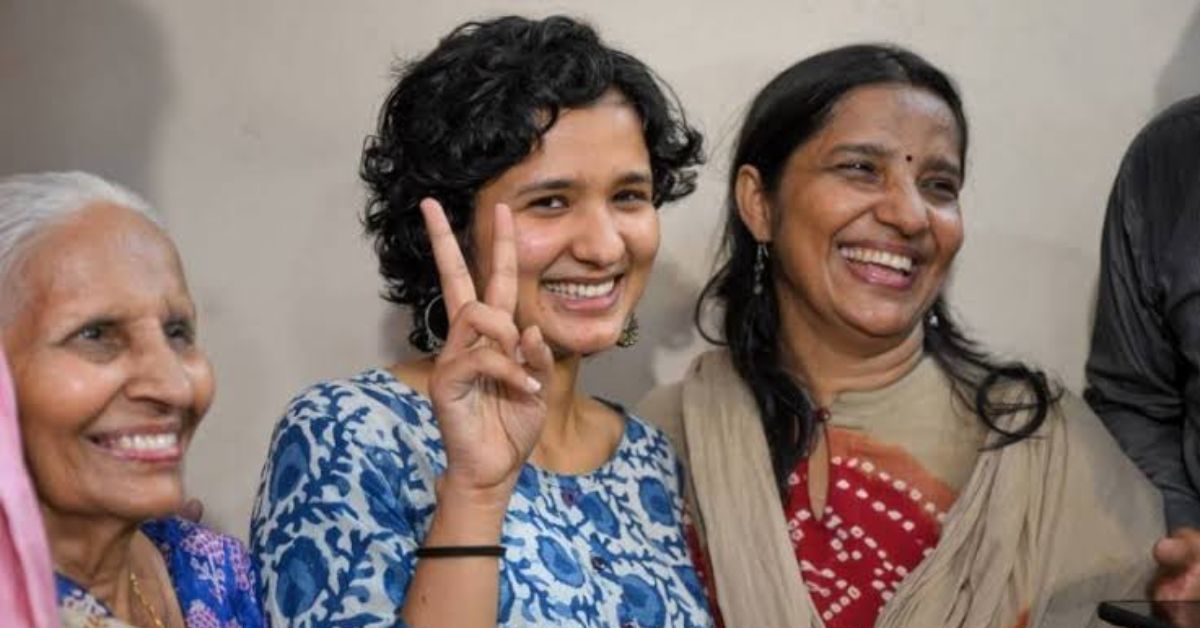
Shruti Sharma IAS is widely known for securing All India Rank 1 in the UPSC Civil Services Examination 2021. Her journey stands out because it combines strong academic foundations, repeated preparation, disciplined revision, and a clear understanding of the examination process.
An alumna of St. Stephen’s College and the Delhi School of Economics, she chose History as her optional subject and emerged at the top of one of India’s most competitive examinations. This article covers her background, education, UPSC journey, preparation approach, marks, optional subject, lessons for aspirants, and frequently asked questions. It also separates verified information from commonly repeated claims so readers can get a more reliable 2026 overview.
Shruti Sharma IAS Quick Facts 2026
| Detail | Information |
| Full name | Shruti Sharma |
| Profession | Indian Administrative Service officer |
| Famous for | UPSC CSE 2021 topper |
| UPSC rank | AIR 1 |
| Examination year | 2021 |
| Educational background | St. Stephen’s College and Delhi School of Economics |
| Graduation subject | History |
| Optional subject | History |
| Known interests | Reading and watching films |
| Notable achievement | Among the women who occupied the top three ranks in UPSC CSE 2021 |
The UPSC CSE 2021 result placed Shruti Sharma at the top, followed by Ankita Agarwal and Gamini Singla. The result became particularly notable because women secured all three leading positions.
Shruti Sharma IAS Early Life and Educational Background
Shruti Sharma’s public success story is often discussed through the lens of her academic journey. She studied at St. Stephen’s College, University of Delhi, where she pursued History, before continuing her postgraduate studies at the Delhi School of Economics. This humanities background also created a natural connection with the broad historical, social, political, and analytical themes tested in the Civil Services Examination.
Her journey demonstrates an important lesson for UPSC aspirants: there is no single “perfect” academic background for the examination. Engineering, science, commerce, humanities, and other graduates regularly appear among successful candidates. What matters more is understanding the syllabus, developing conceptual clarity, connecting current affairs with static subjects, and practicing answer writing under examination conditions.
UPSC Journey and All India Rank 1
Shruti Sharma secured AIR 1 in the 2021 Civil Services Examination. Contemporary and later reports describe the achievement as coming in her second attempt, while available topper information also confirms her position as the highest-ranked candidate in the final result.
The Civil Services Examination requires candidates to progress through multiple stages: Preliminary Examination, Main Examination, and the Personality Test. Success therefore depends on more than memorising information. Candidates must build factual knowledge for Prelims, analytical writing ability for Mains, and communication and judgment skills for the interview.
Education, History Optional and Academic Advantage
History was Shruti Sharma’s academic subject and later became her optional subject for UPSC preparation. Choosing an optional connected to an existing academic strength can be useful because it may reduce the time required to build foundational understanding. However, familiarity alone does not guarantee high marks.
A strong optional-subject strategy generally includes:
- Understanding the complete syllabus before collecting resources.
- Using limited but reliable books and notes.
- Revising repeatedly rather than constantly changing material.
- Studying previous years’ questions.
- Practicing structured, time-bound answers.
- Connecting facts with interpretation and historical context.
Her success reinforces the value of building depth in one subject instead of chasing an endless collection of study materials.
What Aspirants Can Learn From Her Preparation Journey
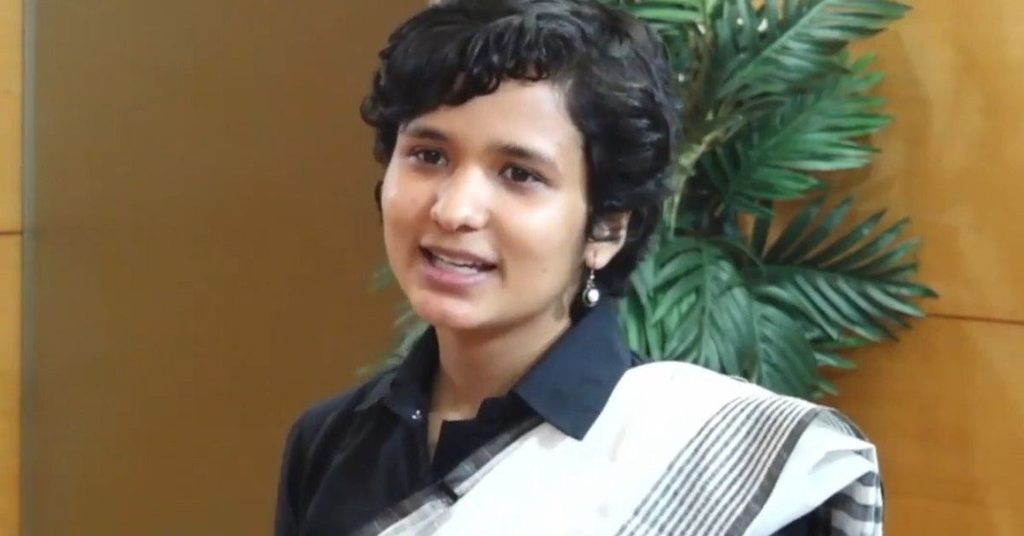
The biggest lesson from a UPSC topper’s story is not to copy every personal routine. Every candidate has different strengths, available time, educational backgrounds, and weaknesses. The more useful approach is to identify the principles behind successful preparation.
First, preparation needs a clear syllabus-based structure. Second, revision must happen repeatedly; reading a book once rarely produces reliable recall during an examination. Third, answer writing should not be postponed until the final months. Finally, candidates should regularly test themselves through mock papers and previous-year questions.
For aspirants balancing college or work, consistency can be more valuable than occasional extremely long study sessions. A realistic daily plan that can be sustained for months usually performs better than an unsustainable timetable.
Read More: Thomas J. Henry Net Worth 2026: How Much Is the Texas Lawyer Worth?
Why the UPSC CSE 2021 Result Was Significant
The 2021 result attracted national attention because Shruti Sharma secured the first rank, while Ankita Agarwal and Gamini Singla secured the next two positions. This made the top three an all-women group, an important moment frequently highlighted in discussions about women’s representation and achievement in competitive examinations.
The result also showed that UPSC success cannot be predicted solely from a candidate’s professional background. The examination rewards a combination of knowledge, analytical thinking, written expression, judgment, and sustained preparation across a wide syllabus.
Common Myths About UPSC Preparation
Many aspirants delay serious preparation because they believe successful candidates possess extraordinary intelligence or study for sixteen hours every day. Topper stories usually present a more complicated reality. Discipline, planning, revision, and learning from mistakes are often more important than dramatic study-hour claims.
Another myth is that coaching alone guarantees selection. Coaching can provide guidance, test series, and structure, but the final result depends on the candidate’s own understanding and performance. Similarly, expensive resources do not automatically create better preparation. A carefully selected set of books, notes, current-affairs sources, and test practice can be enough when used consistently.
A Practical UPSC Preparation Framework
A useful preparation framework can be divided into five stages:
- Understand the syllabus: Read every topic and identify overlap between Prelims, Mains, and the optional subject.
- Build foundations: Use standard textbooks and dependable sources for core concepts.
- Integrate current affairs: Connect news with the relevant General Studies topics instead of collecting disconnected facts.
- Practice actively: Solve MCQs, write answers, and attempt full-length tests.
- Revise strategically: Create concise notes and revisit important information repeatedly.
This framework is adaptable. A beginner may spend more time on foundations, while a repeat candidate may focus more heavily on testing and correcting recurring weaknesses.
Shruti Sharma IAS and the Importance of Answer Writing

Mains answer writing is one of the biggest differences between ordinary preparation and examination-ready preparation. Knowing a topic is not enough if the candidate cannot explain it clearly within a limited time and word count.
Strong answers generally include a brief introduction, a logical body with headings or dimensions, relevant examples or data, and a concise conclusion. Diagrams, maps, flowcharts, and tables can improve presentation when they genuinely clarify the answer. The goal is not decoration but communication.
Aspirants should also analyze evaluated answers and identify patterns such as weak introductions, missing examples, poor time management, or conclusions that simply repeat the question.
Career Significance of Becoming an IAS Officer
The Indian Administrative Service is one of the major services filled through the UPSC Civil Services Examination. Officers work across administrative assignments involving public policy, implementation, district administration, and government departments. Responsibilities change according to cadre, seniority, posting, and institutional requirements.
For aspirants, the broader lesson is that preparation should be connected with an understanding of public administration and governance. Studying only for marks can make learning mechanical, while connecting subjects with real-world policy issues can improve both comprehension and answer quality.
Lessons From the AIR 1 Journey
The story of Shruti Sharma offers several practical takeaways:
- Academic strengths can be converted into an effective optional-subject strategy.
- A high rank requires preparation for every stage of the examination.
- Revision is as important as collecting new information.
- Previous-year questions reveal the nature of UPSC’s demand.
- Consistency is more useful than copying another candidate’s timetable.
- Answer writing needs deliberate practice.
- Aspirants should rely on verified information instead of viral social-media claims.
The final lesson is especially important in 2026, when biographies and preparation stories can quickly spread online with incorrect details. Official records and established educational sources should be preferred when verifying ranks, marks, cadre information, or career postings.
FAQs:
Who is Shruti Sharma?
Shruti Sharma is an Indian civil services achiever best known for securing All India Rank 1 in the UPSC Civil Services Examination 2021.
What rank did Shruti Sharma secure in UPSC?
She secured AIR 1 in the UPSC Civil Services Examination 2021.
What was Shruti Sharma’s optional subject?
History is reported as her optional subject, matching her academic background in the subject.
Where did Shruti Sharma study?
She studied at St. Stephen’s College and later pursued postgraduate studies at the Delhi School of Economics.
Which UPSC examination did Shruti Sharma top?
She topped the Civil Services Examination for the 2021 cycle.
Was Shruti Sharma’s UPSC success achieved in her first attempt?
Recent educational reports describe her AIR 1 achievement as coming in her second attempt.
What can beginners learn from her UPSC journey?
Beginners can learn the importance of syllabus-based preparation, revision, answer writing, and using reliable study resources.
Is coaching compulsory for UPSC preparation?
No. Coaching may provide structure and guidance, but selection ultimately depends on a candidate’s independent preparation and examination performance.
How important is an optional subject in UPSC Mains?
The optional papers contribute significantly to the written examination score, so subject selection and sustained practice are important.
What is the best preparation strategy for UPSC aspirants?
The best strategy is one that matches the candidate’s strengths and schedule while covering the syllabus, revision, current affairs, previous-year questions, and regular test practice.
Conclusion
Shruti Sharma’s journey from a strong academic foundation to AIR 1 in UPSC CSE 2021 remains a useful example for aspirants who want to understand what sustained preparation can achieve.
Her background in History, structured academic path, and success at the highest level demonstrate that effective preparation is built through understanding, revision, practice, and consistency rather than shortcuts. For anyone researching Shruti Sharma IAS, the most useful takeaway is to focus less on copying a topper’s exact daily routine and more on adopting the underlying principles that make long-term preparation effective.


