Johnny Manziel: Talent, Turmoil, and the Making of a Modern Football Cautionary Tale

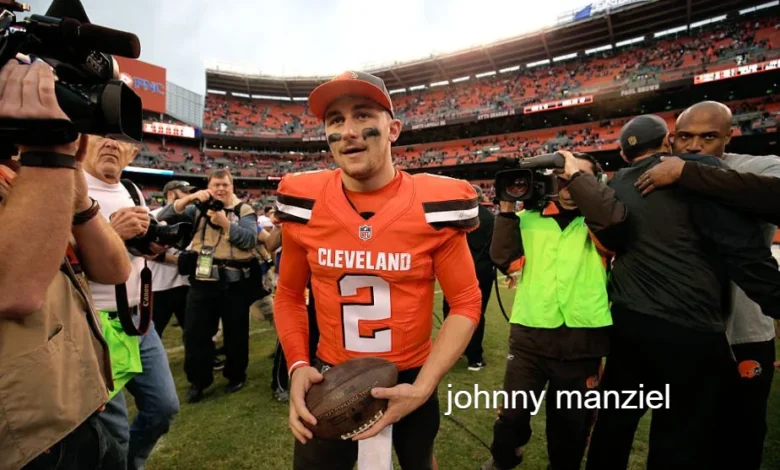
Introduction: The Phenomenon Known as Johnny Football
Johnny Manziel is one of the most fascinating figures in modern American football, not just because of what he accomplished on the field, but because of how dramatically his story unfolded. For a brief moment in the early 2010s, Manziel wasn’t just a quarterback—he was a cultural event. Fans, analysts, and critics alike couldn’t look away as his electrifying style of play redefined what was possible at the college level.
What made Manziel so compelling was the combination of raw talent and fearless improvisation. He played football like a street game, turning broken plays into highlight reels and making elite defenses look confused and slow. At the same time, his confidence—bordering on arrogance—made him polarizing. Some saw a future superstar; others saw warning signs that couldn’t be ignored.
Looking back now, Johnny Manziel’s career offers far more than a simple rise-and-fall narrative. It provides insight into the pressures of fame, the challenges young athletes face, and how the modern sports ecosystem can amplify both success and self-destruction. His story is messy, human, and ultimately instructive.
College Stardom at Texas A&M: Where the Legend Began
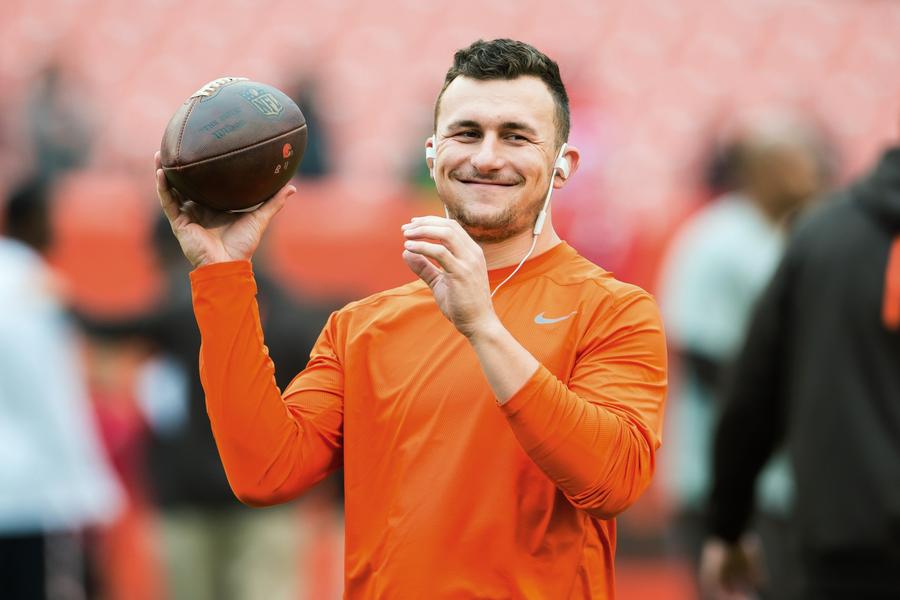
Johnny Manziel’s ascent to fame began at Texas A&M, and it happened faster than anyone could have predicted. As a redshirt freshman in 2012, Manziel stepped into the starting quarterback role and immediately changed the identity of the Aggies’ offense. His ability to extend plays, scramble under pressure, and throw accurately on the move made him nearly impossible to defend.
What separated Manziel from other dual-threat quarterbacks was his instinctive feel for chaos. He didn’t just escape pressure—he thrived in it. Defenders often had him dead to rights, only to watch him spin away, roll out, and deliver a strike downfield. These moments weren’t accidents; they were the product of elite spatial awareness and rare athletic intuition.
That season culminated in Manziel winning the Heisman Trophy, making him the first freshman ever to receive college football’s highest individual honor. It wasn’t just the stats that earned him the award; it was the way he dominated the national conversation. Every week felt like an event, and every game added another chapter to the growing mythology of “Johnny Football.”
The Weight of Fame and Early Warning Signs
With unprecedented success came unprecedented attention, and Johnny Manziel found himself navigating fame at an age when most players are still figuring out who they are. Media coverage followed his every move, and social media amplified his lifestyle choices in real time. For better or worse, Manziel became a brand as much as a quarterback.
Even during his college years, concerns about maturity and focus began to surface. Reports of late nights, partying, and clashes with coaches painted a picture of a player who struggled with structure. While his on-field performance remained strong, there was a growing sense that his off-field habits could eventually catch up to him.
To his credit, Manziel continued to perform at a high level in college, but the cracks were visible. The same confidence that fueled his fearless play sometimes manifested as recklessness away from the field. In hindsight, these moments weren’t isolated incidents—they were early indicators of deeper challenges that would define the next phase of his career.
The NFL Dream: Draft Day and Immediate Pressure
Johnny Manziel entered the 2014 NFL Draft as one of the most talked-about prospects in years. Teams were split: some believed his playmaking ability would translate to the professional level, while others worried that his style relied too heavily on improvisation. When the Cleveland Browns selected him in the first round, it felt like a gamble rooted in hope as much as evaluation.
From the moment he arrived in Cleveland, the pressure was immense. The Browns were a franchise desperate for a quarterback, and Manziel was expected to be both a savior and a spectacle. Unlike college, where he could rely on athletic mismatches, the NFL demanded precision, preparation, and consistency.
Unfortunately, Manziel struggled to adapt. His footwork, decision-making, and command of the offense lagged behind expectations. While flashes of brilliance appeared occasionally, they were overshadowed by inconsistency and mistakes. The league that once seemed ready-made for his creativity quickly exposed the areas of his game that needed refinement.
Off-Field Struggles and Career Derailment
As his on-field performance wavered, Johnny Manziel’s off-field issues intensified. Reports of missed meetings, questionable behavior, and clashes with the coaching staff became common. What once felt like youthful exuberance now looked like a lack of professionalism in a league that demands total commitment.
Manziel later revealed that substance abuse and mental health struggles played a significant role during this period. At the time, however, the narrative focused more on his failures than the underlying causes. The NFL, for all its resources, was not equipped to handle a young player unraveling under the spotlight.
By 2016, Manziel’s time in the NFL was effectively over. Released by the Browns and unable to secure another long-term opportunity, his professional football dream ended almost as quickly as it began. For many fans, it was a disappointing conclusion; for others, it felt inevitable.
Life After the NFL: Reflection, Recovery, and Reinvention
After leaving the NFL, Johnny Manziel’s life took several unexpected turns. He played briefly in alternative leagues, including the Canadian Football League and the Alliance of American Football, but those stints failed to reignite his career. By then, football was no longer the central focus—it was survival and self-understanding.
In candid interviews and documentaries, Manziel opened up about his struggles with addiction, depression, and identity. These revelations reframed his story, shifting the conversation from one of wasted talent to one of human vulnerability. For the first time, fans saw the person behind the persona.
Today, Manziel appears more at peace with his past. While he may never return to professional football, his willingness to speak openly about his mistakes has made his story meaningful in a different way. It serves as a reminder that success without balance can be destructive, and that growth often comes only after hitting bottom.
Legacy: More Than Just a What-If Story
Johnny Manziel’s legacy is complicated, but it’s far from empty. On one hand, he represents one of the greatest “what-if” stories in football history—a player with generational talent who couldn’t sustain it at the highest level. On the other hand, his impact on the game, especially at the college level, is undeniable.
He helped popularize the modern dual-threat quarterback and showed that improvisation could coexist with elite competition. Many quarterbacks who followed benefited from the doors he helped open, even if they learned from his mistakes rather than his successes.
Ultimately, Johnny Manziel’s story endures because it’s real. It’s not a fairy tale or a clean tragedy—it’s a complex narrative about talent, pressure, personal demons, and accountability. And in that complexity, his journey continues to resonate with fans, athletes, and anyone trying to navigate success in a demanding world.